
In the 1960’s radio began to take off in popularity,
traditionally, all radio stations and production would use analogue technology.
Analogue technology meaning that the DJ’s would have to spend hours queuing vinyl’s
for a singular show, sometimes in the queuing process an ‘8-track-tape’ would
be used however both methods were very time consuming and essentially the DJ’s
needed a mass of storage to keep the vinyl’s especially in a long broadcast.
 Playing vinyl’s has many other disadvantages, these being
elements such as the expense of a vinyl along with the inefficiency on finding
a particular track you wanted to play due to not a clear track detail.
Playing vinyl’s has many other disadvantages, these being
elements such as the expense of a vinyl along with the inefficiency on finding
a particular track you wanted to play due to not a clear track detail.
For pre-recorded audio or idents that would be placed in shows this would’ve had to be produced
with an analogue tape, after recording you would then had to use a technique
named ‘Splicing’, this was a physical cutting of the tape which the audio had been recorded onto , this ensured that the tape ran smoothly and all unusable audio
was cut out.
20 years on from the 1960’s radio started to evolve, this
began with the development of technologies such as a CD (Compact Disc), CD’s
grew hugely in popularity with DJ’s due to their superior sound quality and the
smaller storage needed.
 As well as the minimised storage in comparison to vinyl's tracks could be found quicker and easier due to clearer track details.
As well as the minimised storage in comparison to vinyl's tracks could be found quicker and easier due to clearer track details.
From this point in the 1980’s technology started to evolve
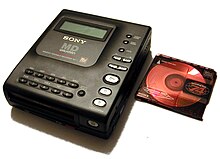
rapidly, in the 1990’s recordable formats such as the mini-disc and digital audio
tape made production even easier however storage constraints were still problematic.
In the beginning of the 2000’s and onwards technology began
to revolutionise radio production, and this began with computer operated shows.
Whilst sometimes
stations still use CD’s the majority of stations use a ‘Play Server’, this is a
catalogue for music that DJ’s access throughout the show, DJ’s now have access
to all songs that they need on a computer and simply click to play. Radio
Playlist for shows however are still made far in advance this ensures that
shows run smoothly and adhere to certain OFCOM checks.
Other advantages of having a play-server is the increased focus on timing for the presenters, this meaning that they can begin to play a song and use the introduction of the song as bedding music and they speak before any lyrics play, they can even have a countdown until the first lyrics begin, this looks really professional and is impressive to listeners. Often this technique is used on national commercial stations due to the high end play-servers and the practice it takes.
Other advantages of having a play-server is the increased focus on timing for the presenters, this meaning that they can begin to play a song and use the introduction of the song as bedding music and they speak before any lyrics play, they can even have a countdown until the first lyrics begin, this looks really professional and is impressive to listeners. Often this technique is used on national commercial stations due to the high end play-servers and the practice it takes.
As well as play servers, DJ’s now also have digital mixing desks,
these control live mixing in programmes and can control aspects such as volume,
SFX and microphones.
In terms of volume, another piece of equipment that is often used is monitors, monitors measure sound levels and ensure that the audio played isn't harmfully loud to listen to and is loud enough for the audience to hear. A good level of sound should be 5/6 as this is a good neutral level for the audience to enjoy the programme at.
In terms of volume, another piece of equipment that is often used is monitors, monitors measure sound levels and ensure that the audio played isn't harmfully loud to listen to and is loud enough for the audience to hear. A good level of sound should be 5/6 as this is a good neutral level for the audience to enjoy the programme at.
 File formats have equally evolved allowing high quality files
such as WAV and FLAC to become the most frequently used, as well as file formats
non-linear editing packages such as Pro-Tools and Adobe Audition are used to
edit and record programmes, packages and idents. To help control and add specific SFX, jingles, adverts and beds a CartWall would be used, this being operated by the presenter also throughout a show.
File formats have equally evolved allowing high quality files
such as WAV and FLAC to become the most frequently used, as well as file formats
non-linear editing packages such as Pro-Tools and Adobe Audition are used to
edit and record programmes, packages and idents. To help control and add specific SFX, jingles, adverts and beds a CartWall would be used, this being operated by the presenter also throughout a show.
Key crew that are needed to run a station include ; Producers,
presenters, researchers and even an assistant producer in many cases. Behind
the scenes of a radio programme you see many job roles listeners would never
consider, e.g. the researcher is a key asset due to them finding online content
for the show as well as creating buzz for competitions and games the stations
often host over social media, this demonstrating the technological convergence of radio along with the interactive and surveillance gratification.
Shows have running orders, these act-like scripts detailing what
songs, information and SFX will be played, its important for shows to have
these as shows are not allowed to replay the same songs and genres at the same
time consistently as this goes against the OFCOM regulations. Normally a running order is colour coordinated dependant on the genre this makes it very easy to see what is being played at a certain time.


No comments:
Post a Comment