Tuesday, 28 January 2020

LO2: Technology and processes

In terms of how radio has progressed through time, the best way to demonstrate this is to compare with the processes that DJ (Disc Jockeys) has to go through.
In the 1960’s radio began to take off in popularity, traditionally, all radio stations and production would use analogue technology. Analogue technology meaning that the DJ’s would have to spend hours queuing vinyl’s for a singular show, sometimes in the queuing process an ‘8-track-tape’ would be used however both methods were very time consuming and essentially the DJ’s needed a mass of storage to keep the vinyl’s especially in a long broadcast.
Image result for 8 track tape"Playing vinyl’s has many other disadvantages, these being elements such as the expense of a vinyl along with the inefficiency on finding a particular track you wanted to play due to not a clear track detail.
For pre-recorded audio or idents that would be placed in shows this would’ve had to be produced with an analogue tape, after recording you would then had to use a technique named ‘Splicing’, this was a physical cutting of the tape which the audio had been recorded onto , this ensured that the tape ran smoothly and all unusable audio was cut out.

20 years on from the 1960’s radio started to evolve, this began with the development of technologies such as a CD (Compact Disc), CD’s grew hugely in popularity with DJ’s due to their superior sound quality and the smaller storage needed.
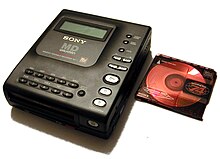
Image result for mini disc used in radio production"As well as the minimised storage in comparison to vinyl's tracks could be found quicker and easier due to clearer track details.
From this point in the 1980’s technology started to evolve rapidly, in the 1990’s recordable formats such as the mini-disc and digital audio tape made production even easier however storage constraints were still problematic.
In the beginning of the 2000’s and onwards technology began to revolutionise radio production, and this began with computer operated shows.

 Whilst sometimes stations still use CD’s the majority of stations use a ‘Play Server’, this is a catalogue for music that DJ’s access throughout the show, DJ’s now have access to all songs that they need on a computer and simply click to play. Radio Playlist for shows however are still made far in advance this ensures that shows run smoothly and adhere to certain OFCOM checks.
Other advantages of having a play-server is the increased focus on timing for the presenters, this meaning that they can begin to play a song and use the introduction of the song as bedding music and they speak before any lyrics play, they can even have a countdown until the first lyrics begin, this looks really professional and is impressive to listeners. Often this technique is used on national commercial stations due to the high end play-servers and the practice it takes.

As well as play servers, DJ’s now also have digital mixing desks, these control live mixing in programmes and can control aspects such as volume, SFX and microphones.
In terms of volume, another piece of equipment that is often used is monitors, monitors measure sound levels and ensure that the audio played isn't harmfully loud to listen to and is loud enough for the audience to hear. A good level of sound should be 5/6 as this is a good neutral level for the audience to enjoy the programme at.

File formats have equally evolved allowing high quality files such as WAV and FLAC to become the most frequently used, as well as file formats non-linear editing packages such as Pro-Tools and Adobe Audition are used to edit and record programmes, packages and idents. To help control and add specific SFX, jingles, adverts and beds a CartWall would be used, this being operated by the presenter also throughout a show.

Key crew that are needed to run a station include ; Producers, presenters, researchers and even an assistant producer in many cases. Behind the scenes of a radio programme you see many job roles listeners would never consider, e.g. the researcher is a key asset due to them finding online content for the show as well as creating buzz for competitions and games the stations often host over social media, this demonstrating the technological convergence of radio along with the interactive and surveillance gratification.

Shows have running orders, these act-like scripts detailing what songs, information and SFX will be played, its important for shows to have these as shows are not allowed to replay the same songs and genres at the same time consistently as this goes against the OFCOM regulations. Normally a running order is colour coordinated dependant on the genre this makes it very easy to see what is being played at a certain time.

LO2: Multiplatform distribution


Platforms that Heart broadcast too are very varied to target their mass audience, Heart is a national commercial channel and with a weekly listener count of 4.6 million, they need to broadcast to a huge range of different distribution channels. 
Heart has an app format, this is demonstrated above and is ran by a conglomerate company called GlobalPlayer, this company also owns stations such as Capital FM, Radio X and Classic FM, because of this huge ownership of national radios GlobalPlayer all these stations are combined on the Heart app and can be accessed this maximising the listenership for all stations.
By having an app for the radio to be accessed by it encourages this technological convergence culture that attracts younger audience members due to the digital nature.
The app also has a schedule for all stations as well as incorporating 'Showbiz News', this element of the app incorporates a more magazine element to the app allowing a surveillance aspect to the show that can be ingested quicker than listening to the station. 
Headings that are included in the showbiz news section are; Royals, Parenting, Beauty and Lifestyle, this demonstrating perfectly what the demographic of the target audience is.
As well as app access Heart can also be accessed on both digital and analogue radio, this being on the frequency of 100.7, the very rememberable tuning number is due to the mass audience and encouraging them to tune into the first number they remember. 
However Heart publishing that their target audience being 25-44 means that a large proportion of the audience will tune into the station on their commuting journey through DAB/FM radio therefore its important that the tuning number is made part of the brand image to make it stick as part of the station. 
Another distribution that is less known is on TV, Heart have a TV channel which plays broadcasted radio, by having so many varied distribution channels it increases the likelihood of people listening to the station.
By having such a huge array of multiplatform to broadcast to it allows average hours and reach to increase due convergence and this is displayed in the two RAJAR measurements below, in the 1999 statistics that demonstrate listenership before technological convergence it emphasis' the lack of reach and total hours, this could be explained by radio not being available on the go like it is with technological convergence and app distribution which would definitely explain the boost in hours listened.


Tuesday, 21 January 2020

LO1 Task 2: Ownership of different types of radio stations

1. Kerrang (Commercial)

Kerrang is an commercial station that you will find on the tuning number 105.2, the station itself is a subsidiary to Bauer Media, Bauer was established in 1981 and ensured that they had built a good brand image whilst they sold popular Kerrang Magazines before they launched media.
They play rock music and broadcast to the West Midlands and their TSA is to places such as Birmingham, Coventry and Wolverhampton.

Bauer cross media ownership 

- Bauer are a huge distributor of magazines such as Heat and Q as well as Kerrang
- Bauer media however has a branch called Passion which distributes national products such as Kerrang 105.2
- Bauer also has joint ownership of Box tv, a music channel.

The station launched in June 2004, broadcasted on FM in the west midlands on DAB and Freeview and they have an audience of 1.4 million.

Kerrang platforms

- FM radio i.e traditional radio in homes and cars
- DAB radio, these found in home and cars also
- Freeview, this accessed on televisions
- Downloadable App
- Radio Player

This meaning horizontal integration and allows easy cross promotion and synergy.

Hosts include ex-Tv personalities or big music presences, e.g Kate Lawler - Big Brother Winner 2002

RAJA - Board of Radio and regulators

- Listenership

61% men
due to the music genre played

50% ABC1

15-35 age audience

2. Hallam FM (Local/regional)


Hallam FM is local but commercial, 97.4 is the frequency of the show, and first show was in 1974 in Sheffield.


The TSA is Sheffield, Rotherham,Doncaster and Barnsley, Hallam FM is part of local radio branch of Bauer called Bauer Place.

 Famous hosts include Big John at Breakfast, their TSA is saturated and competitors are stations such as Capital, BBC 1, BBC Sheffield.

- Listenership

54% Female audience

37% ABC1

25-45 age audience

Sponsorships include the Big Meadowhall light switch on, School of the week and Bupa Great Run,
all being very family based and involvements in the local area.

3. Sheffield Live (Community/local)

A local and community based station, its an independent company, OFCOM 2011 ' small scale and not for profit stations that deliver social gain'
Social Gain - having social topics about the community and dominated content about local news.
Conmedia Sheffield Ltd.

It is run by Sangita Basudev, hosts include local people that volunteer from the community.
Sheffield Lives TSA include Central, Nether edge, Broomhill and Crookes.
The music played must represent the community cultures e.g Reggae, Asian, Latin as well as RnB and pop.

The majority of the shows are in English but they're shows in mandarin and other languages.
Broadcasting Act 1990 - they're not allowed to gain more than 50% of their running costs through advertisement.

Sheffield Live would also gain funds through Regulator Ofcom  - community radio fund.
Grant has been used on Sangita who helps to run the show.

4. Beats1 (streaming)


An example of a streaming service is Beats1 this is an online station that operates solely on the internet and doesn't broadcast anything over radio waves, Beats1 is owned by Apple and is a feature of itunes and apple music streaming service.


Due to it being owned by Apple, a huge conglomerate company this makes Beats1 a subsidiary station and allows cross promotion for the show on many other media platforms.
Beats1 is an international commercial station due to it being live for 24 hours a day and having presenters based in LA to London to ensure that programmes are constantly being streamed to appeal to their target audience who live worldwide and have multiple time zones.

Presenters are Matt Wilkinson who is an editor for NME, and is known for scouting out new music talent, by having presenters who are known in the music business this allows the station to have more credibility. The station has many music based programmes with news updates and general talking throughout, genres of music are very varied, a big proportion is pop and current music however due to the international audience the hosts are playing current music in hundreds of genres. 
Their 'flagship' show is hosted by Zane Lowe at 4pm and in this show we once again hear a huge range of genres but when accessing the programmes you are prompted to look at the DJ's playlist linked to the apple music company this once again being cross promotion between subsidiary.

Adverts on the programme are very short and are said to be more compared to 'audio mentions' for 'sponsors' rather than minute long advert breaks often heard on local/regional stations such as Hallam FM. Sponsors are from established international big brands e.g American Express, this being due to the international mass audience. The short mentions of the 'sponsors' e.g. "brought to you by American Express" means that they seem way less invasive whilst the audience is listening, this especially being more effective for a digital native as they are tired of being constantly pushed products on other media outlets.

The station itself is free however you need to have access to Apple's Itunes app, this being a tactic to cross promote other subsidiary companies from Apple but a huge majority of their target audience of digital natives do have apple products due to the huge brand image and reputation. This strategic placement of the station is try and encourage memberships to the sister streaming service Itunes.

Comparison

In looking at this streaming service one of the biggest comparisons being the way the station is accessed, the streaming quality of the station is a huge unique selling point, this constant streaming of music and programmes internationally allows the station to always be broadcasting, this demonstrating globalisation as they currently stream to over 100 countries worldwide.
Similarities they have are the popular music they play on their shows, even though the genres hugely vary they play very current and known songs this to engage familiarity between the listeners, this is similar with big national stations that are playing to a mass audience like BBC Radio1 


5. Forge Radio (e.g university, college and school)


The university of Sheffield have a non-profit radio station named Forge Radio, on this station students of the university can have slots where they decide the content of the programme, this radio is non-profit due to it being education-ran and produced for the purpose of practice on the air as well as providing content for other students of the university to listen too.


This station has a huge range of programme content, due to students deciding what content they want to produce this leaves a huge array of perspectives to lead the shows, this being a similarity to the SheffieldLive! due to it being produced to serve a purpose other than commercial gain.
Shows are scheduled and the the majority of shows do include regular music with often intervals, by carrying on this very stereotypical commercial programme layout this will entice an audience from the University of Sheffield students due to the familiarity of the programmes.
However more speech heavy programmes are broadcasted, these shows are normally surrounding topics around the university, for example in the run up to the Sheffield UO elections for president there will be speeches from the candidates on the station to engage with the specific target audience. 

The station does occasionally broadcast adverts however this is not for financial gain but for community gain e.g local businesses that would appeal to the target audience such as city taxi due to the going out culture with university students and the taxi company being only operative in Sheffield.

The radio is accessed by the Forge Radio website, because its such a niche audience that the station is targeting it is easier to stream the station online as well as the digital native audience not normally having a DAB or FM radio due to technological convergence.

Comparison

This non-profit station has similarities with a local radio as they both act as a resource for many people rather than a commercial gain company, the size of Forge Radio is another clear contrast due to the students running the station being only from the university as well as the primary audience being very small considering the university scale, this low budget station however does have a huge variety of content this once again drawing similarities between a non-profit and a local community radio.


6. BBC (Public Service Broadcast)

The BBC is a government funded conglomerate that own a huge arrange of media subsidiaries such on platforms such as TV, Radio and news outlets. 
The BBC radio has recently been rebranded as BBC Sounds, in this huge blanket term the company has 20+ separate stations that all broadcast and target a different audience, because of the size of BBC Sounds the company is able to target a huge mass audience from all over the UK, this includes special stations for Scotland and Wales and Ireland. 

BBC Sounds however is a public service broadcast meaning that all funding is from the UK government, this meaning that the station has to conform to supply content that will inform, educate and entertain the audience to ensure that it is fulfilling all requirements.
As well as radio stations BBC sounds also has a huge array of podcasts and playlists that range hugely in content and form to achieve these three areas required. 

BBC Sounds is accessed by the users online and on an app, however the target audience for some stations are much older this meaning that many of the main stations do have designated tuning numbers, for example one of the flagship stations for the BBC being Radio1 has tuning number 97-99FM and is often used to be played on radios when listeners are on their way to work and other commuting journeys.
On the flagship Radio1 they play very main stream music and speak about popular news that often is lighthearted, by broadcasting such friendly and family friendly content it allows the target audience to be very mainstream.
On other contrasting stations Radio5 Live is targeted at an older male audience, on the channel a lot of programmes are sports based especially around football due to that being the predominant sport in the UK, accompanying this are programmes with content about business and news based programmes this demonstrating the older generations that are being targeted.


Comparison

A comparison with this public service broadcast is their duty to deliver a certain type of programmes to their audience this is similar to a local community station needing to provide social gain e.g showing social topics about the community and representing the community in the music they play. 
BBC however are funded by the government, this meaning that no adverts are needed to be played as no commercial gain is needed in terms of the stations.


LO4: Evaluating content, audio levels and flow of the final production (D2)

ThrowBack Thursdays is a radio show that focuses on playing early 2000's songs that resonate and create nostalgia for their 18-25 female...